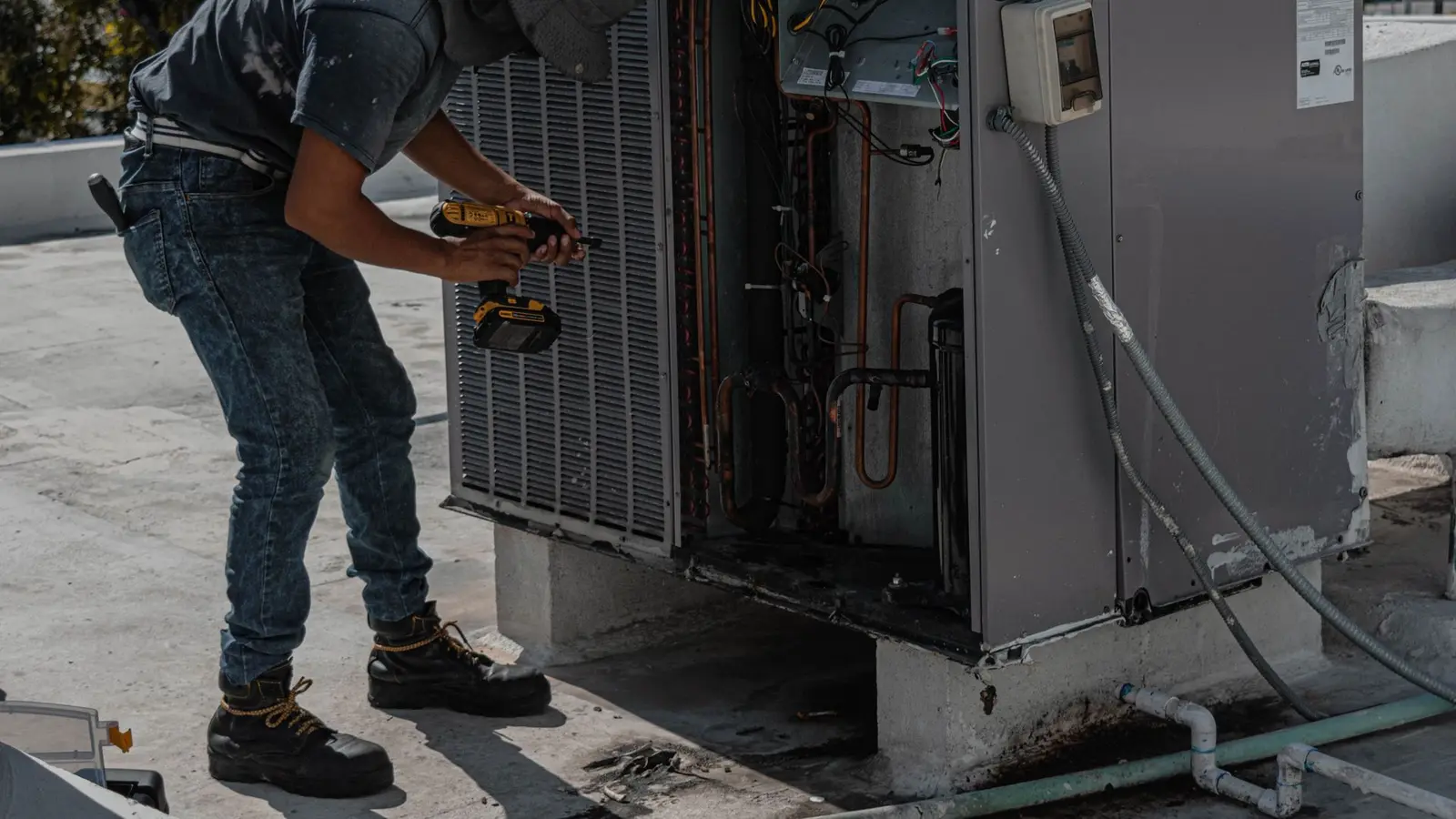
How do we diagnose an AC problem?
Listen to what it did
When it stopped, what you heard and whether the breaker tripped.
Check airflow
Filter, blower, indoor coil and the supply and return vents.
Test the electrical side
Voltage, capacitor, contactor, motors and safety switches.
Check the refrigerant circuit
Pressures and temperatures, then a leak search if the charge is low.
Free estimate, then repair
You get the price first. After the repair the system runs a full cycle.
Which parts fail most often?
- Run capacitor: the unit hums but the fan or compressor won't start
- Contactor: the outdoor unit won't come on, or won't shut off
- Condenser fan motor: the compressor overheats and trips
- Condensate drain: water at the air handler or a tripped float switch
- Refrigerant leak: ice on the lines and long run times
- Blower motor: little or no air at the vents
- Thermostat or wiring: no call for cooling reaches the unit
What affects the cost of an AC repair?
The part and the time it takes to reach it. We don't list prices because every system is different. The estimate is free.
| What affects the price | Why it matters |
|---|---|
| Part | Electrical parts cost less than compressors, coils and motors |
| Refrigerant | R-22 is no longer made or imported, so supply comes from recovered and reclaimed stock |
| Leak repair | Finding and fixing a leak comes before any recharge |
| Location | Attics and crawl spaces add time |
What does air conditioner repair cover?
Anything that stops a home cooling system from cooling. That means the outdoor condensing unit, the indoor coil and blower, the refrigerant lines between them, the thermostat and low-voltage wiring, and the condensate drain.
Most summer failures in Fayetteville are electrical or drainage problems. With average July highs of 91.4°F and lows near 72°F, a system here runs for long stretches, and capacitors, contactors and fan motors wear out under that load.
What are the signs an AC needs repair?
Warm air from the vents is the obvious one. Others are easier to miss: the outdoor fan runs but the compressor doesn't, the unit short-cycles on and off, the house feels clammy, or the electric bill climbs with no change in the weather.
Ice on the copper line at the outdoor unit means low airflow or low refrigerant. Turn the system off and let it thaw before anyone tests it. Water at the indoor unit usually means a clogged drain line.
Does AC repair need a license or a permit?
North Carolina requires a license to install, alter or restore a heating or cooling system for pay. Minor repairs and part replacements that don't change the energy source or the piping, such as capacitors, contactors, motors, coils and compressors, are outside the licensing article (N.C. General Statute 87-21).
The city's multi-trade HVAC application is a replacement form, so a repair that keeps the same equipment doesn't use it. Replacing a condensing unit or air handler is different. See AC installation and replacement.
AC Repair questions
Why is my air conditioner running but not cooling the house?
Why is there ice on my AC lines?
Why does my AC trip the breaker?
Do you repair air conditioners that use R-22?
Get a ac repair quote in Fayetteville
Send your name and phone number, then the address and what the system is doing. We take requests 24/7 and the estimate is free.